AMOS is a registered trademark of Alpha Microsystems.
Updated January 25, 1998
What's Here?
 |
Information about VAM |
| |
Requirements for VAM |
| |
Differences between VAM and an AM-1000 |
| |
Availability of VAM |
| |
Screen Shots |
VAM is a Windows emulation of the Alpha Micro AM-1000 computer system. VAM allows just about any AM-1000 compatible software, including assembly language code, to run on a Windows 95 or Windows NT based PC. This amazing feat is possible because the VAM program emulates both the 68000 processor found in an AM-1000 but also emulates the AM-1000's hardware functions (such as the read-time clock, interval timer, serial port etc).
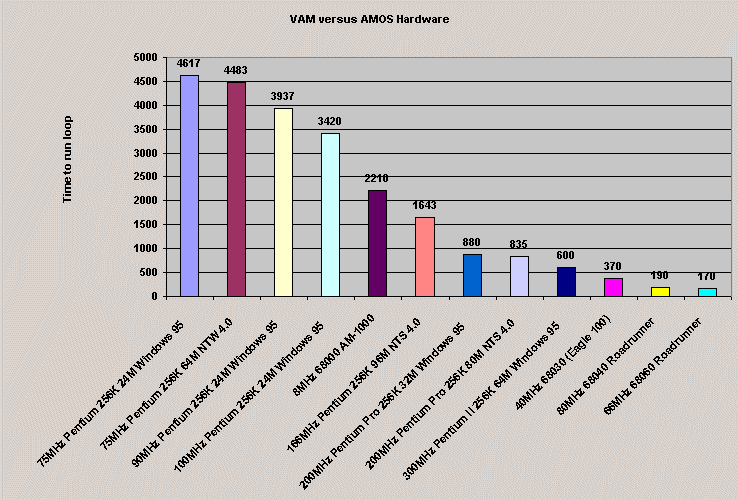
As you would expect, the performance of the emulator isn't fantastic, however, with PC based systems now typically running a Pentium at 133MHz, better than AM-1000 performance can be obtained on these entry level machines. On the 200MHz Pentium Pro system used to develop VAM, performance better than a Falcon card can be obtained. Note that VAM is optimized for Intel's Pentium series processors (and compatibles like the Cyrix and AMD processors) and therefore will not run on a 486 series processor. Besides, trust me - you don't want to run VAM on anything less than a 133MHz Pentium.
This chart shows performance of VAM relative to some AMOS machines. The times represent how long it takes to run the famous FOR I=1 TO 10000 : NEXT loop in AlphaBASIC.
VAM emulates two serial ports. The first, AM1000=0 is a direct connection to ZTERM for Windows, which is the only emulator compatible with VAM. AMOS port AM1000=1 can be connected to any Windows compatible serial port. It's designed to allow connection between AMOS and PC modems.
This is a single user product designed for people like me that occasionally need to be able to run AMOS on my Windows PC without having to have a Falcon, which I can't use anyway because Alpha Micro doesn't have an NT driver for the Falcon.
On the the PC, you need a Pentium class processor and Windows 95 or Windows NT. You also need to have ZTERM for Windows, build 90 or later installed. Although ZTERM for Windows is compatible with Windows 3.1 due to Win32s, VAM is not supported on Windows 3.1.
VAM runs AMOS 2.3 or later only - AMOS 1.x is not supported. VAM supports SCSI peripherals that AMOS supports via a Windows-supported SCSI host adaptor.
Differences between VAM and an AM-1000
VAM isn't a perfect emulator - however, it does emulate enough of the AM-1000 to run AMOS very well. It was written based upon information in Alpha Micro's AM-1000 Series Technical Manual (PDB-00007-01) and data sheets from Motorola (6840 timer and 6850 serial controller) and Oki (5832 Real-Time Clock).
The following are known differences from the AM-1000:
Don't expect VAM to work with SYSXER!
VAM is currently not available, primarily because there are a few bugs left to iron out and a few features that need to be added. For instance, currently there is no SCSI bus support nor is there SSD emulation. This is roughly two months work to get fixed.
However, obviously selling an emulator without an operating system is rather pointless, so VAM will be supplied with a single user version of AMOS 2.3, licensed from Alpha Micro. The license details are almost worked out with Alpha Micro.
So, the main question becomes, is it worth getting VAM finished. I'm estimating that the price will be roughly $399, which includes a dongle to emulate the SSD, installer on CD-ROM, single-user, two port AMOS 2.3 license and a copy of ZTERM for Windows.
If you think you'll have a market for this product, it's imperative that you voice your opinion. Please send email to [email protected]. Availability will totally depend on feedback.
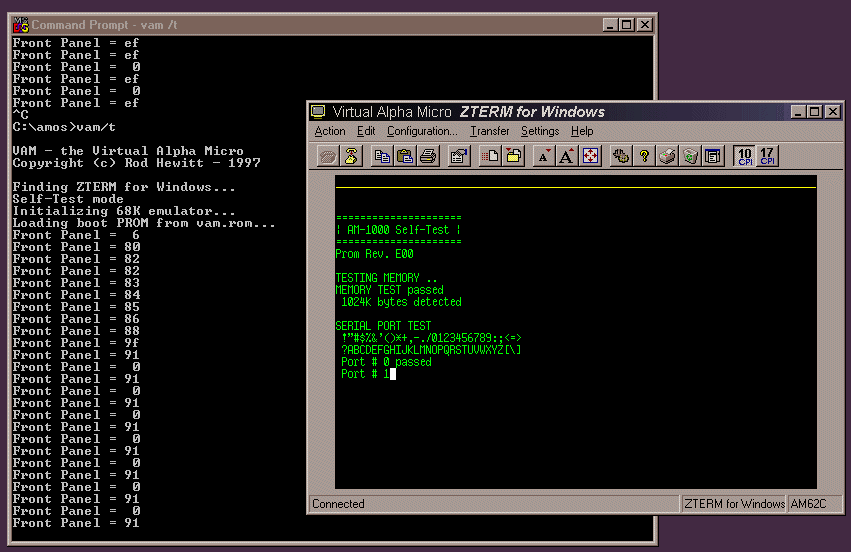
VAM running the self-test routines from the AM-1000 ROM:
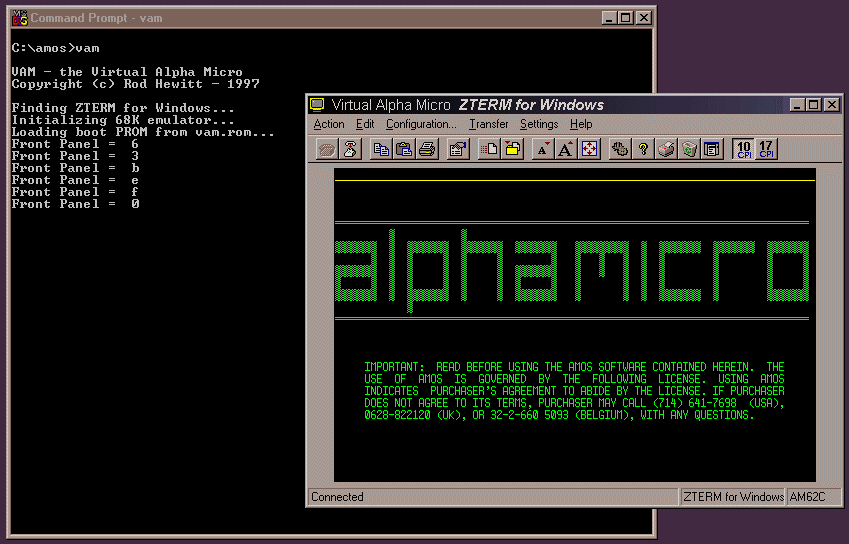
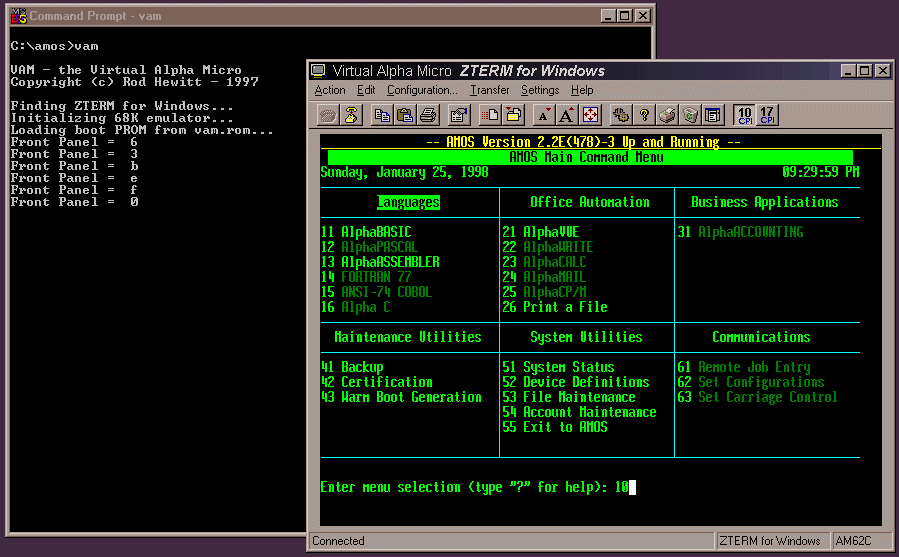
VAM booting AMOS:
VAM running the AMOS shell:
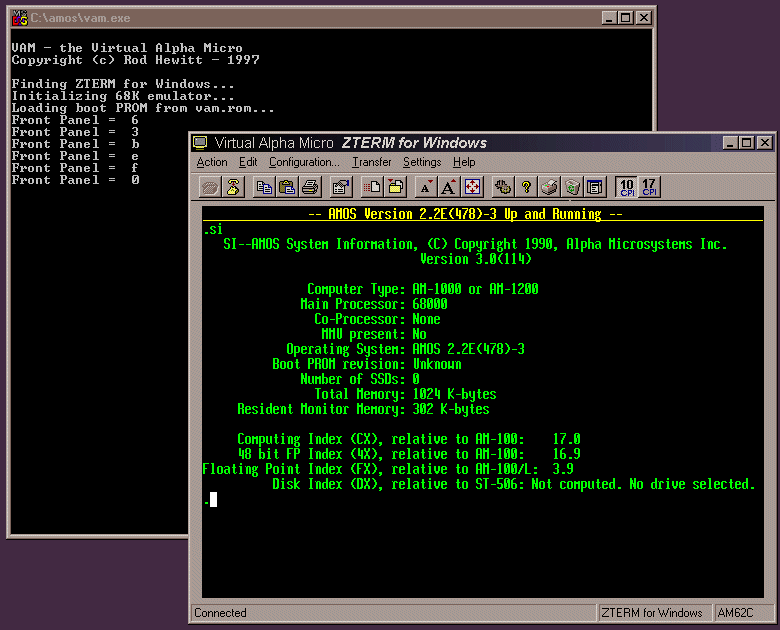
VAM running SI: